What Is Drift Taxi: Everything You Need to Know Before Riding
Drift Taxi: Far More Than Just a Car Ride
If you landed here searching for "what is drift taxi" you have probably seen a TikTok or Instagram video of people screaming inside a car going sideways with tyre smoke everywhere, and wondered what on earth is going on. Here is the simplest explanation you will find.
A drift taxi is a motorsport experience where you are the passenger and a professional driver steers a purpose-built drift car — sliding it sideways in a controlled manner — around a closed circuit. You do not drive. You do not need to know anything about cars. You just get in, buckle your seatbelt and enjoy 15 minutes of pure adrenaline while the driver works magic with the steering wheel.
What Is Drifting as a Discipline?
To understand drift taxi, it helps to know what drifting actually is. Drifting is a motorsport discipline where the goal is not to cross the finish line first but to slide the car sideways in the most controlled, spectacular and stylish way possible. It originated in Japan in the 1970s, became globally famous through car culture and media, and today it is a professional sport with world championships, full-time drivers and millions of fans.
In a drift competition, judges score the car's angle (how sideways it goes), speed, the line the driver takes, the amount of tyre smoke and the fluidity of transitions between corners. It is a blend of technical skill and visual spectacle.
Drift taxi takes that same skill and turns it into an experience accessible to anyone. Instead of watching from a screen, you live it from inside the car.
The Car: BMW E36 328i Set Up for Drift
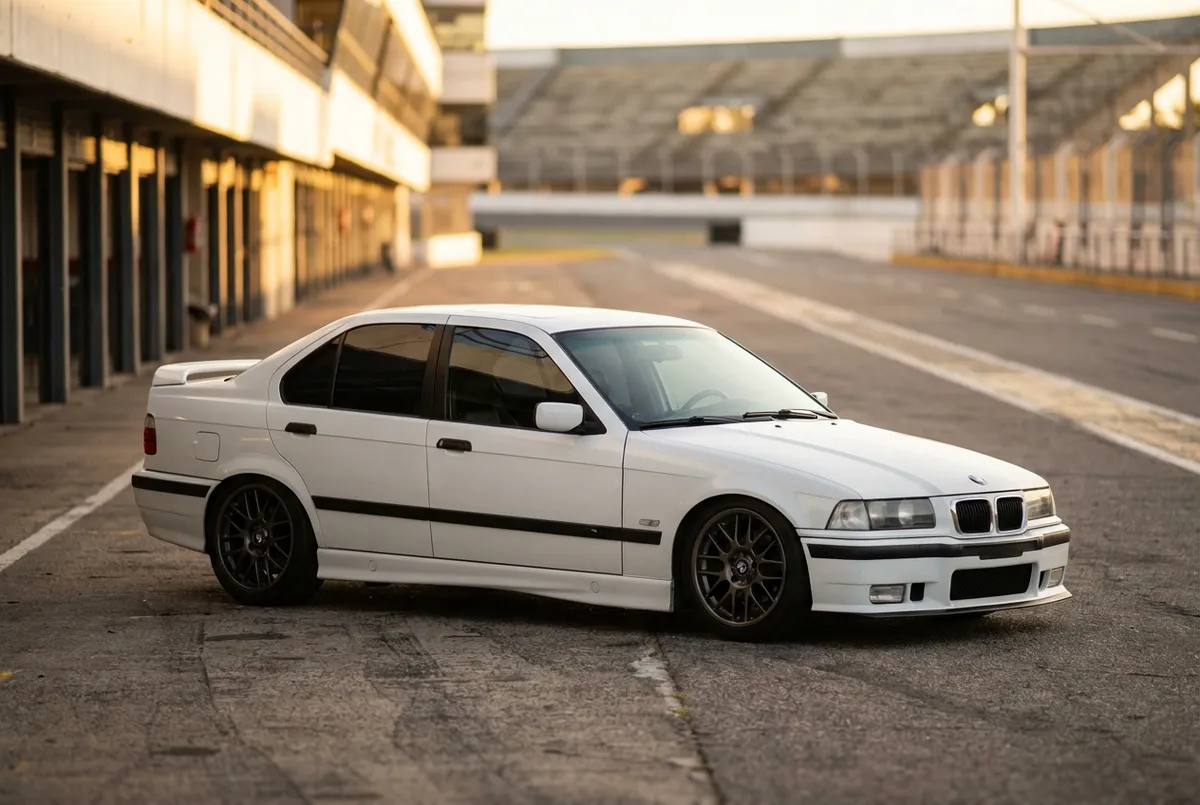
The car used is a BMW E36 328i set up for drifting. Key specifications:
- Engine: BMW M52 2.8-litre inline-6, rear-wheel drive. One of the most reliable and balanced engines BMW ever produced
- Differential: Welded (locked diff). Both rear wheels always spin at the same speed, which is essential for sustaining a drift. A street car has an open diff and cannot drift consistently
- Suspension: Height and stiffness-adjustable coilovers configured specifically for drift — firmer than a road car, with increased steering angle
- Interior: Stock, with seatbelts and an onboard fire extinguisher
- Steering: Extended angle kit allowing the car to achieve more extreme sideways angles than a stock BMW
If you are interested in the technical details, we have a dedicated article about the BMW E36 drift build and its modifications.
The Driver: Who Is Behind the Wheel
The TROMPO driver is not a standard driving instructor. They are an active drift competitor with years of track experience. They know every metre of the circuit, understand exactly how the car reacts in each corner and adjust the drift intensity based on each individual passenger.
If it is your first time and you are nervous, the driver starts gentler and gradually increases intensity. If you have been before or are a motorsport enthusiast, they can go full send from minute one. Communication is ongoing — if at any point you want to stop or dial it back, there are clear signals explained before you go out.
Safety: Every Detail Matters
One of the most common questions is whether this is dangerous. The honest answer: drifting carries inherent risk like any motorsport activity, but that risk is managed through multiple layers of safety.
- Professional driver: At the wheel the whole time, adjusting the intensity to each passenger
- Helmet: Provided by us. Protects the head in case of impact or jolt
- Seatbelt: Fastened and adjusted before you head out
- Onboard fire extinguisher: Accessible from the cockpit
- Private circuit: No other vehicles on track during your session. No pedestrians. Generous run-off areas at every corner
How Drift Taxi Differs From Other Experiences
Drift taxi is not karting, not a simulator and not a scenic classic car tour. Here is the key difference with each:
- vs Go-karting: In karting you drive a kart at 60-80 km/h. In drift taxi you are a passenger going sideways at 100+ km/h. The G-forces are completely different. For the full comparison, read our Drift vs Karting article
- vs Simulator: A simulator has no real tyre smoke, no real engine vibrations and no real G-forces pushing you into the seatbelt. Drift taxi is the real experience
- vs Track day (where you drive): On a track day you drive and are limited by your own skill. In drift taxi, a professional pushes the car to the limit — you just enjoy
- vs Skydiving: Skydiving is vertical adrenaline. Drifting is horizontal — lateral forces, tangible speed, smell, sound. Complementary experiences, not competing ones
Who Can Ride
Virtually anyone. No physical exam or prior experience is required. The only practical limitations are:
- You need to fit comfortably in the passenger seat and buckle the seatbelt. Very large individuals may have difficulty — contact us if in doubt
- Under 18: check with us on WhatsApp before booking
- If you have serious neck or spinal issues, consult your doctor first. The lateral forces are significant
- Not recommended during pregnancy
Frequently Asked Questions
Do I need car experience or a driving licence?
No. You are a passenger. You do not touch the steering wheel or pedals. You need zero car knowledge.
Is it dangerous?
It carries the inherent risk of any motorsport activity, but it is managed with multiple safety layers: helmet, onboard fire extinguisher, closed circuit and a professional driver. Hundreds of passengers have ridden without incident.
What if I feel sick or want to stop?
Before heading out, you are taught a clear signal to ask the driver to stop immediately. You can request a stop at any time with no questions asked. It happens very rarely, but the option is always there.
How fast does the car go?
It depends on the section. On straights the car can exceed 120 km/h. Through corners, the tangential speed is 80-100 km/h but the sensation is far more intense because you are going sideways with 1-1.5G of lateral force.
What is the minimum age?
Under 18: check with us on WhatsApp before booking.
Want to know the full experience step by step? Or check out our updated pricing and packages.
What shoes should I wear?
Closed-toe shoes required. No sandals or heels for safety reasons.
How do I book?
Choose a date from our calendar, fill in the form and we contact you via WhatsApp to confirm payment and time.